Unreal Engine 5 · Blueprint → C++
Apply Damage in Unreal Engine 5 C++
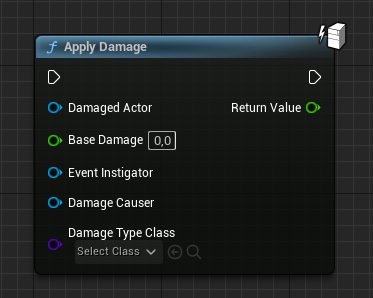
The Blueprint Apply Damage node maps to UGameplayStatics::ApplyDamage(), which deals a point of damage to an actor and triggers its TakeDamage event.
Blueprint node & C++ equivalent
#include "Kismet/GameplayStatics.h"

AController* EventInstigator;
AActor* DamagedActor;
AActor* DamageCauser;

UGameplayStatics::ApplyDamage(
	DamagedActor,                  // Damaged actor
	100.0f,                        // Damage amount
	EventInstigator,               // Instigator
	DamageCauser,                  // Damage causer
	UDamageType::StaticClass()     // Damage type
);
What does the Apply Damage node do?
Apply Damage deals a fixed amount of damage to a single target actor and routes it through Unreal's damage pipeline. The damaged actor receives the value through its TakeDamage / OnTakeAnyDamage path, where health logic typically subtracts the amount.
The node carries metadata about who caused the hit so gameplay code can attribute kills, apply knockback, or award score.
The C++ equivalent
Call UGameplayStatics::ApplyDamage() after including Kismet/GameplayStatics.h. The parameters are the damaged AActor*, the float damage amount (100.0f here), the AController* instigator, the AActor* damage causer, and a damage type class such as UDamageType::StaticClass().
The instigator is the controller responsible for the damage, while the damage causer is the actor that physically applied it (for example a projectile).
How to receive the damage in C++
Override AActor::TakeDamage in the target class to react to the incoming value, or bind to the OnTakeAnyDamage dynamic delegate. Always call Super::TakeDamage so engine-level handling still runs before your custom health logic.
Frequently asked questions
What is the C++ function for Apply Damage in UE5?+
Use UGameplayStatics::ApplyDamage() from Kismet/GameplayStatics.h, passing the damaged actor, damage amount, instigator controller, damage causer, and a damage type class.
What is the difference between the instigator and damage causer?+
The instigator is the AController responsible for the damage, and the damage causer is the AActor that actually applied it, such as a weapon or projectile.